Walk into the Australian e-bike market in 2015 and you had maybe a dozen brands worth considering. Walk in today and the count runs past fifty, and that is only the brands with a real presence: a dealer network, a local warranty, an Australian website holding Australian stock. There is no official register of e-bike brands the way VFACTS tracks cars, so nobody can hand you a clean number. What we can do is draw the map. The market is tracking towards about 289,000 units and $1.3 billion in 2026, and that money has pulled in a crowd.
How many brands, actually
The honest answer is that nobody knows precisely, and anyone who quotes you an exact figure is guessing. Three things make a clean count impossible. Online-direct brands ship straight from a warehouse to your door without ever appearing on a shop floor, so they leave no dealer footprint to count. Brands enter and leave the market inside a single season. And plenty of names are badge-engineered versions of the same factory platforms, which inflates the brand count without adding much variety.
A conservative tally of brands with a genuine Australian presence clears fifty without effort. Count every brand that will post an e-bike to an Australian address and the number runs past a hundred. The useful way to hold all of that in your head is three groups: the Australian-owned brands, the global majors, and the online-direct wave.
The Australian-owned brands
This is the group most buyers underestimate. Australia has been building e-bike brands for longer than most people think.
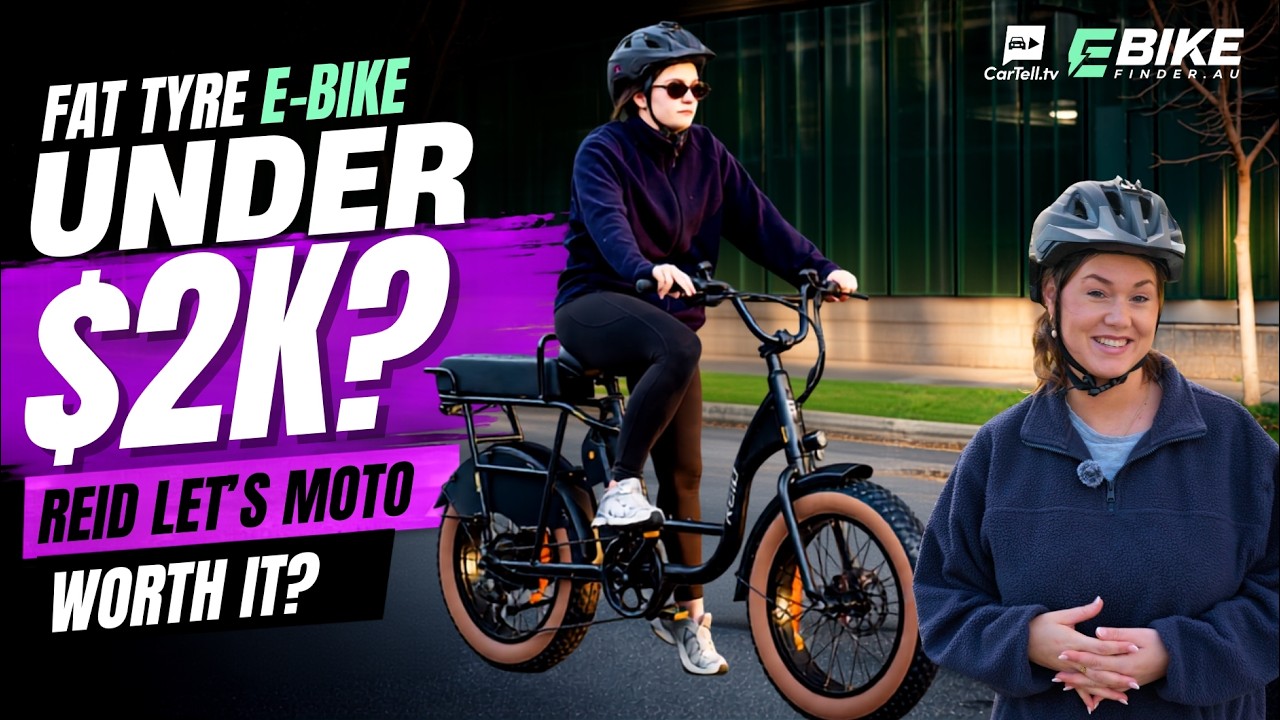
The Electric Bicycle Company, trading as TEBCO, incorporated in 1995 and has sold electric bikes here since 1999. That makes it one of the oldest e-bike brands in the country, on the road before the first iPhone. Reef has been Australian-owned since 2005. Reid, which calls itself the largest Australian-owned bicycle brand, started in a garage in 2009 and now exports to more than thirty-five countries. Lekker brought Dutch-style bikes to Australia the same year and has since opened physical retail down the east coast.
Then come the 2010s names. Dyson Bikes, no relation to the vacuum company, has sold affordable e-bikes here since 2013. VelectriX has more than a decade of commuter-focused bikes behind it. AMPD Bros, out of Burleigh Heads, has held the best-selling claim in the fat-tyre category since 2019. Leitner, FiSHAW, Cleverley and eTourer round out the affordable-to-mid Australian field, the last of those backed by former professional cyclist Stuart O Grady.
Two Australian brands sit outside the mainstream and are worth knowing. Stealth Electric Bikes builds high-power off-road machines that cost as much as a used car. Zoomo, founded in Sydney, went the other direction and now supplies delivery-rider e-bikes to fleets around the world.
The global majors
The big bicycle companies treat e-bikes as core business now, not a side experiment.
Specialized (United States, 1974), Trek (United States, 1976) and Giant (Taiwan, 1972) are the three you will see in most serious bike shops, each with deep electric ranges. Trek also owns Electra, the cruiser brand. Merida and Norco cover the mountain and trail end. Polygon, from Indonesia, has built a strong value position in Australia through the BikesOnline channel.
At the premium end, the German brands carry the badge weight: Riese and Mueller, Focus and Kalkhoff, all built around Bosch motors and priced from $7,000 well into five figures. NCM, which entered Australia in 2019, took the opposite tack, building a national network of brand stores and bike-shop partners around road-legal certified commuters. Aventon arrived from the United States on the strength of sharp fat-tyre pricing, and now sells here exclusively through BikesOnline. Smartmotion, designed in New Zealand, has quietly become one of the most common commuter brands on Australian paths.
The online-direct wave
The newest and noisiest group skips the shop floor entirely. Engwe, Heybike and Velotric sell moped-style and folding e-bikes straight to consumers at prices the traditional brands cannot match, backed by heavy online marketing rather than dealer relationships. They are part of the reason the brand count is impossible to pin down, and part of the reason the established names have had to sharpen their own pricing.
This group rewards caution. A direct-import e-bike with no Australian dealer is only as good as its shipping-box warranty and its compliance paperwork. After the March 2026 law reset, that paperwork matters more than the price.
Cartell Assessment
The number that matters is not the brand count. It is the question behind it: can you get the thing serviced, and is it road-legal. A fifty-brand market sounds like abundance, and for choice it is. For the buyer it mostly means noise. The brands that will still be standing in 2030 are the ones with a physical presence, a real warranty and certified-compliant stock, and that holds whether the badge is Australian, German or new this year. Treat the size of the market as a reason to be careful, not a reason to be dazzled.
AU Outlook
Expect the count to keep climbing through 2026 and then thin out. The 250W national standard and the tighter compliance rules give Australian dealers and the certified global brands a genuine advantage over grey-market online-direct sellers, and that advantage compounds. The brands worth watching are not the ones with the lowest price. They are the ones opening physical doors. We have a companion piece on the brands making their first real move on Australia this year.