Kia has owned the family bus segment in Australia for a decade, and nobody has landed a genuine rival with the numbers to match it, until now. The BYD M9 changes that. BYD's first people mover for Australia is a plug-in hybrid, confirmed from $61,990 plus on-road costs for the eight-seat Dynamic, with the seven-seat Premium arriving first at $72,990 plus on-road costs before the end of 2026. It parks directly on top of the Kia Carnival, the car every other family hauler in this country gets measured against. Here is what each one actually offers, checked against both manufacturers on 25 September 2026.
What the M9 costs, and what the Carnival costs
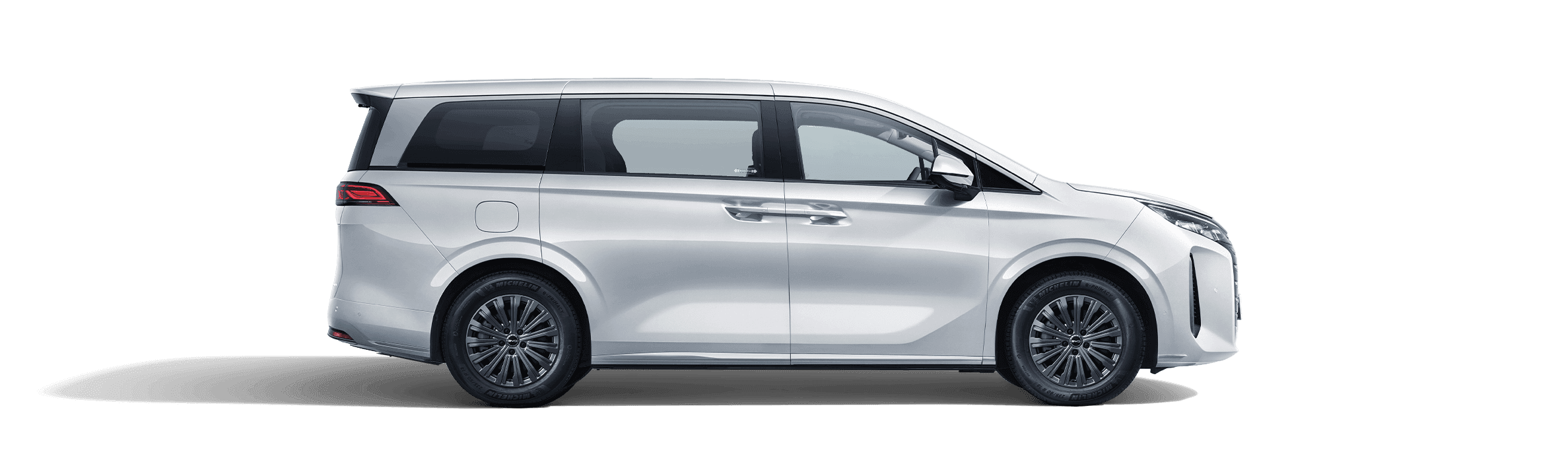
BYD's M9 comes in two grades, both running the same DM-i 5.0 plug-in hybrid system: a 1.5 litre turbo petrol engine paired with an electric motor. The BYD M9 Premium is a seven-seat flagship with 2+2+3 lounge-style seating, a 36.6kWh Blade battery, and a combined 218kW from the petrol engine's 315Nm and the motor's 300Nm, good for a claimed 8.5 seconds to 100km/h. It costs $72,990 plus on-road costs and will be the first version into Australian showrooms, arriving before the end of the year. The cheaper Dynamic is the eight-seat value grade at $61,990 plus on-road costs, with a smaller 20.39kWh battery, but BYD has not yet released its power, torque or range figures. We covered the pricing confirmation in full when it landed, in BYD M9 people mover confirmed for Australia, which followed BYD's original announcement in BYD confirms four new models for Australia.
The Kia Carnival is priced from about $52,000 plus on-road costs for the entry S with the 3.5 litre V6 petrol, running through diesel grades to the hybrid range, which opens at about $56,000 plus on-road costs for the S Hybrid and tops out at about $77,000 plus on-road costs for the GT-Line Hybrid (figures checked against CarExpert and CarsGuide pricing data on 25 September 2026, since Kia's own site only shows pricing through its Build and Price configurator, which is JS rendered). The Carnival Hybrid is a conventional hybrid, not a plug-in: its 1.6 litre turbo petrol engine and electric motor combine for 180kW, with no home charging and no electric-only range, but a claimed 5.8L/100km combined fuel use.
So the real fight is plug-in hybrid against conventional hybrid: the M9 Premium at $72,990 against a Carnival Hybrid range spanning $56,000 to $77,000, and the cheaper M9 Dynamic at $61,990 against a Carnival Hybrid that is already proven, while the Dynamic is still waiting on its own full specification.
Eight seats vs eight seats: the layout truth
Every Kia Carnival grade seats eight, with sliding doors on both sides as standard and a genuinely useful 627 litres of boot space (VDA) behind the third row, growing to 2,827 litres with the second and third rows folded flat. BYD's M9 Dynamic also seats eight, in a 2+3+3 layout, but the Premium trades a seat for comfort: its 2+2+3 configuration swaps the middle row bench for heated, ventilated and massaging captain's chairs, a genuine upgrade for long trips, but it means the Premium only carries seven. BYD quotes up to 2,063 litres of cargo space with the rear seats folded down; it has not published a seats-up boot figure, so that number cannot be compared directly against the Carnival's 627 litres yet.
Range, charging and the school run week
This is where the M9 makes its case. The Premium's plug-in hybrid system is good for up to 145km of electric-only range on the WLTP cycle, meaning most family routines, school runs, sport pickups, the weekly shop, should never need to touch the petrol tank if you can charge at home overnight. Combined range stretches to a claimed 850km on the WLTP cycle, with BYD quoting 2.4L/100km on the combined test once the battery is depleted. The Carnival Hybrid cannot do any of that. It has no plug and no electric-only range, and its 5.8L/100km figure comes purely from a conventional petrol-electric system that recovers energy under braking rather than from the grid. For a family that can charge in the driveway, the M9's real-world fuel bill on local running should be well below the Carnival's. For a family without off-street parking or a home charger, the Carnival's simplicity, plug in nothing, just fill up, remains the easier life.
There is a tax wrinkle worth knowing too. Plug-in hybrids like the M9 lost access to the federal Fringe Benefits Tax exemption for new novated leases from 1 April 2025, as we cover in our novated lease guide. If a salary-sacrificed lease is part of the decision, that exemption now applies only to full battery electric cars, so it will not sweeten the M9's case the way it might have a year ago.
What the Carnival still does better
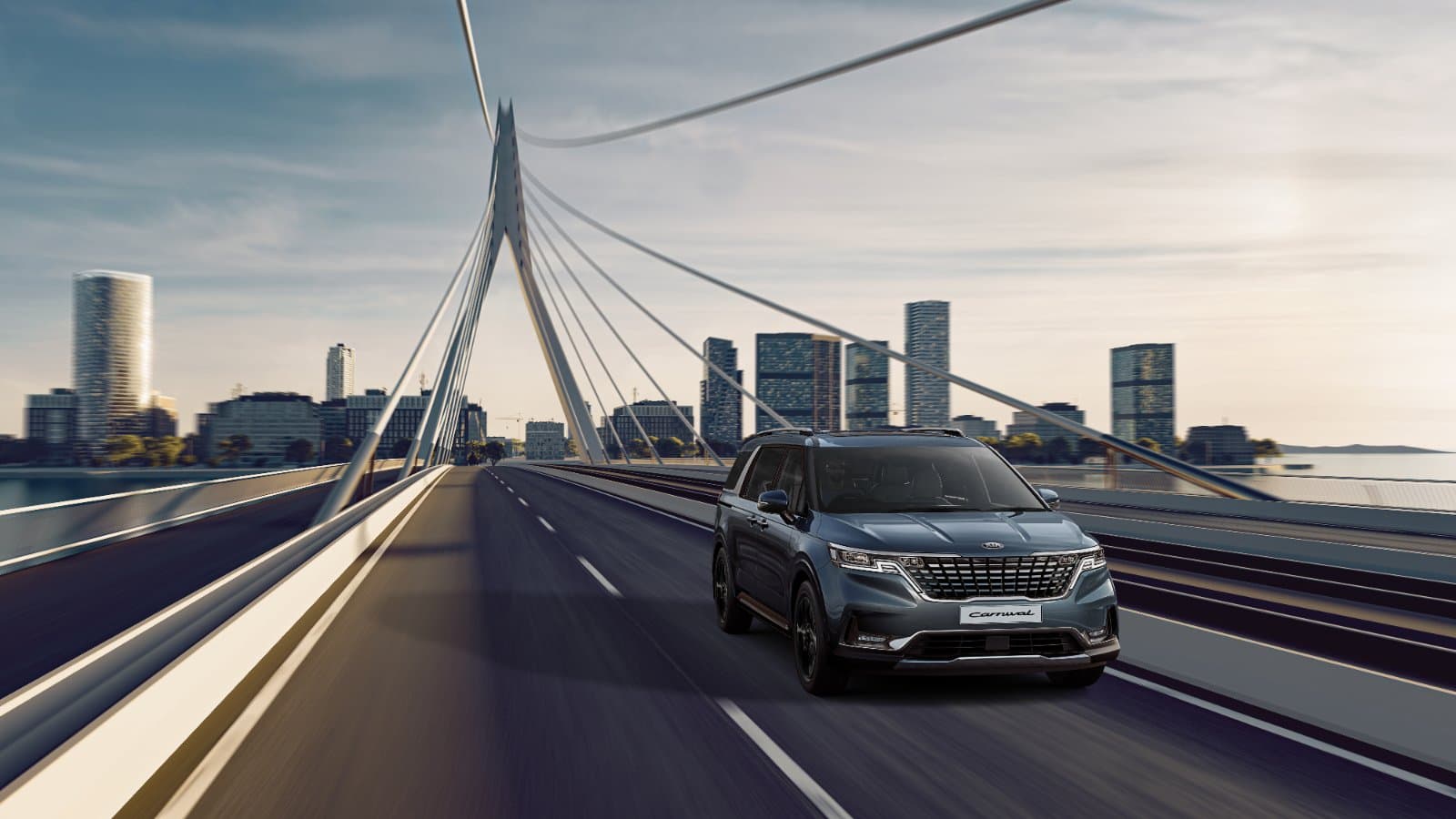
The Carnival's biggest advantage is that it already exists, in showrooms, with a decade of ownership history and Kia's national dealer network behind it. It carries a five-star ANCAP rating first awarded in 2016, formally extended to the hybrid powertrain in August 2025 after ANCAP ran supplementary testing on the hybrid's battery and high-voltage systems. The M9 has no ANCAP rating at all yet, which is normal for a car that has not gone on sale here, but it is a genuine unknown for a family buyer to accept. Kia also backs the Carnival with seven years of unlimited-kilometre warranty and seven years of capped-price servicing, and towing is rated to 2,000kg braked across most of the range, dropping to 1,000kg only on the flagship GT-Line Hybrid. BYD's coverage is shorter at six years or 150,000km for the vehicle, with eight years or 160,000km on the traction battery, and an Australian towing figure is only confirmed so far for the Premium, at 1,500kg braked.
We have also actually driven the car BYD is chasing. Our 2025 Kia Carnival GT-Line Hybrid review rated it four stars and called it the people-mover gold standard, for reasons that still hold: a genuinely comfortable, well resolved family hauler that does not ask anyone to gamble on something new.
Who should wait for the M9
If you need a car now, buy the Carnival. It is rated, proven, backed by a mature dealer network, and the Hybrid grade gets most of the running-cost benefit without the wait. If you can hold off, the case for the M9 Premium is real: a genuinely usable 145km of electric range should cut fuel costs sharply for a family doing normal suburban driving, and BYD's Blade battery and DM-i hybrid system are proven technology in cars like the Shark 6, even if this specific body has not been tested here yet. The eight-seat Dynamic at $61,990 is the one to watch rather than buy today: BYD has not released enough of its specification to know whether it is the smart pick or the compromised one, so wait for the full detail closer to launch before signing.
Either way, this is not a segment BYD has cracked before. Chinese brands have taken share in small and mid-size SUVs, utes and now full-size electric SUVs, but the family people mover has stayed Kia's turf. The Mahindra XUV700 has taken the budget end of the seven-seat market at $29,990 drive-away, and now BYD is taking a run at the premium end. Neither has dislodged the Carnival yet. If a three-row SUV rather than a van-bodied people mover suits your family better, our best seven-seater SUVs guide and our best family SUVs guide cover that shortlist separately.
Cartell verdict
On the numbers alone, the M9 Premium is the more interesting car if you can charge it at home: cheaper running costs on paper, a genuinely long combined range, and a fresher, tech-heavy cabin. But it arrives with no ANCAP rating, no Australian ownership record and a shorter warranty than the car it is chasing, and it costs more to buy than the Carnival Hybrid it should be compared against. The Carnival remains the safer buy today, literally and figuratively. If the M9 lands well when it actually reaches driveways before the end of the year, and BYD backs it with the kind of aggressive pricing that has worked everywhere else, the Carnival will finally have a real fight on its hands. Until then, it is still the default family bus for a reason.