Towing is where electric cars get awkward. Some EVs tow as well as a diesel SUV on paper, others are rated for little more than a box trailer, and every one of them loses range once a caravan is hanging off the back. This guide ranks the electric cars on sale in Australia by their official braked tow rating, so you can see which ones are genuinely built for the job and which ones only look the part.
How we checked: every tow rating below was read on 5 October 2026 from the manufacturer's own Australian documents (Kia's MY2026 brochures, Hyundai's Australian specification sheets, Volvo's Australian support page and Tesla's Australian tow package page). We have not used prices in this guide because EV pricing and offers are moving week to week; see each model's directory page for the current figures. A tow rating is a maximum. Your caravan, boat or trailer has to weigh less than that when loaded, and the car's towball limit matters just as much.
The short answer
For serious towing, the 2,500 kg club is the place to look: the Kia EV9 in its dual motor grades and the Hyundai Ioniq 9. The Volvo EX90 follows at 2,200 kg. Below that, the Hyundai Ioniq 5 and Tesla Model Y sit at roughly 1,600 kg, enough for a pop-top or a small boat, and the Kia EV5 tops out at 1,250 kg.
1. Hyundai Ioniq 9: 2,500 kg braked
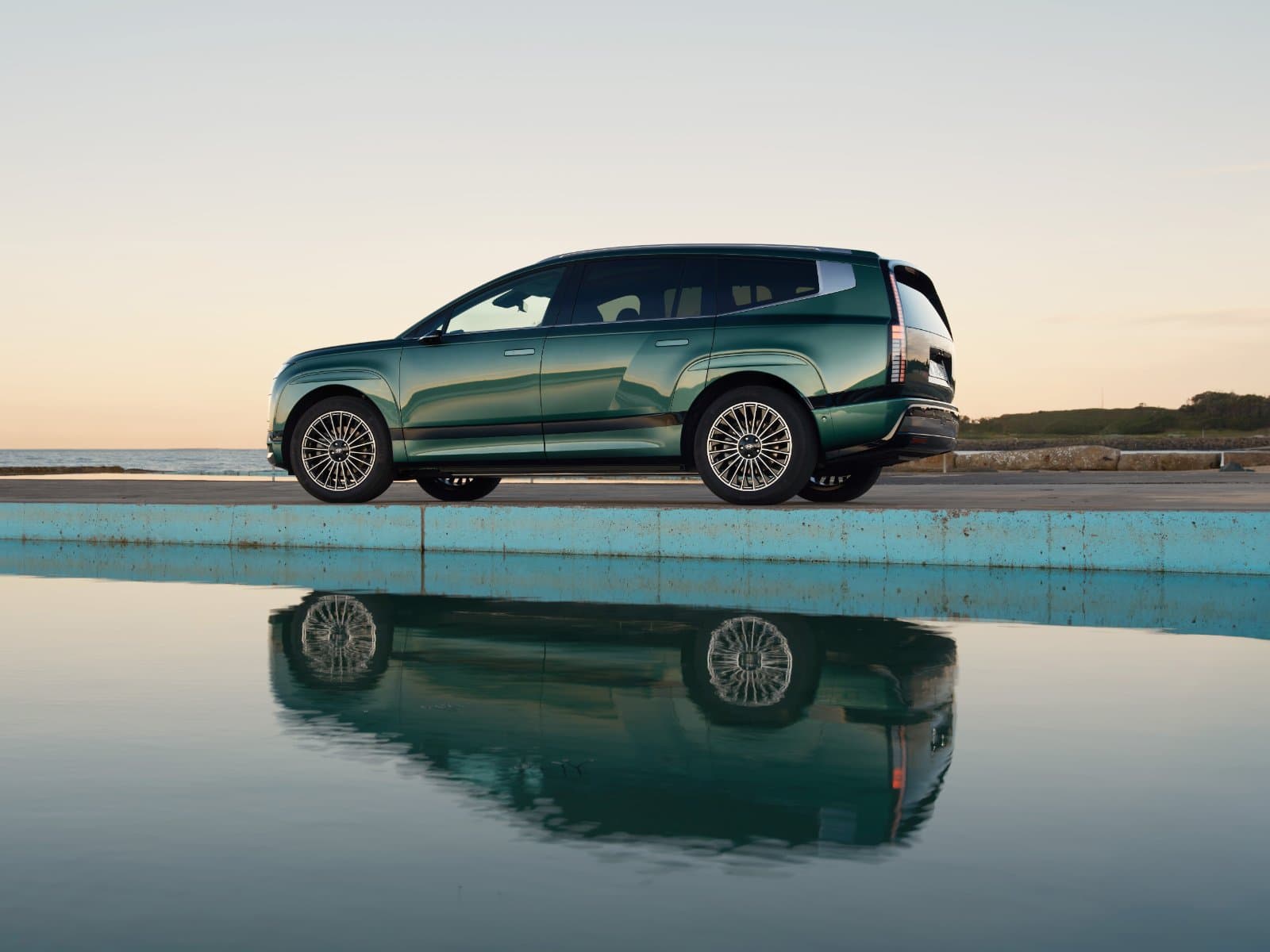
Hyundai's Australian specification sheet lists the Ioniq 9 at 2,500 kg braked, 750 kg unbraked and a maximum towball weight of 125 kg. It also has the biggest battery here: 110.3 kWh, with a claimed WLTP range of 600 km, and 314 kW and 700 Nm from the dual motor setup. It is offered in 7 seat and 6 seat layouts. That combination of rating and battery is why it leads our list. Large battery plus 2,500 kg is the closest an EV gets to the old diesel SUV towing brief. Read our best electric 7 seaters guide for how it stacks up as a family car.
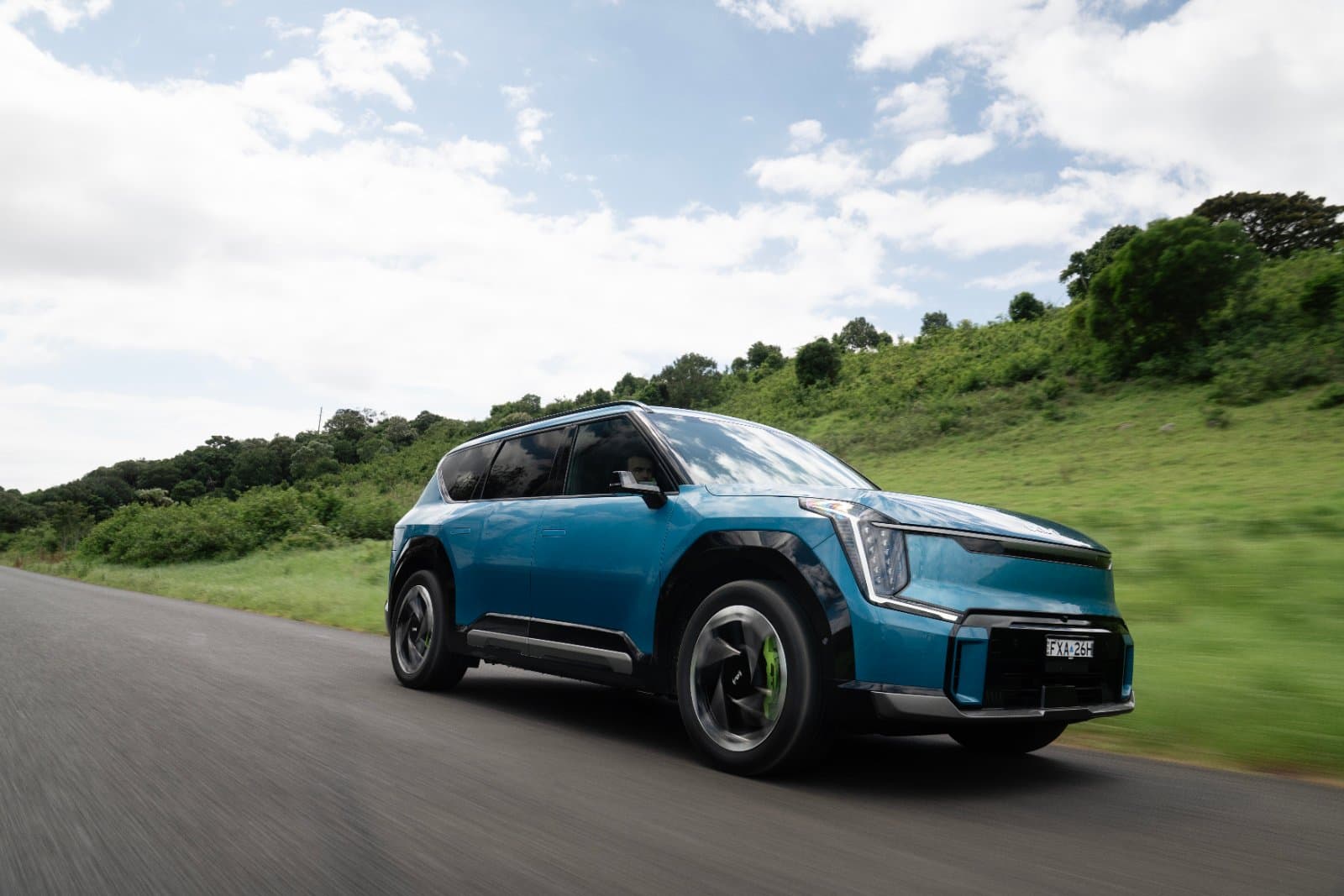
2. Kia EV9 (dual motor grades): 2,500 kg braked
Kia's MY2026 EV9 brochure lists 2,500 kg braked and 750 kg unbraked for the all wheel drive grades (Earth, GT-Line and GT), with a 125 kg towball download and a 99.8 kWh battery. WLTP ranges are 512 km for the Earth, 505 km for the GT-Line and 510 km for the GT. The catch is the entry car. The rear wheel drive Air, with its 76.1 kWh battery and 160 kW and 350 Nm, is rated at only 900 kg braked, 450 kg unbraked and a 45 kg towball load. If towing is the reason you are buying, do not assume the cheapest EV9 can do it. Its 443 km WLTP range is also the shortest in the line-up.
3. Volvo EX90: 2,200 kg braked
Volvo's Australian support page gives the EX90 a maximum braked trailer weight of 2,200 kg, 750 kg unbraked and a 100 kg towball load. Volvo's Australian site quotes an estimated range of up to 479 km for the single motor and up to 521 km for the twin motor Performance, and charging from 10 to 80 per cent in around 24 minutes on a DC fast charger (figures Volvo describes as estimates). Volvo's own Australian EV towing article describes the EX90 as taking you "comfortably into four-berth territory" for caravans. It is the premium pick of the three.
4. Hyundai Ioniq 5: 1,600 kg braked
Every Ioniq 5 variant is rated at 1,600 kg braked, 750 kg unbraked and 100 kg towball weight, according to Hyundai's 2026 Australian specification sheet. It has an 84 kWh battery across the range, with WLTP figures of 570 km for the Elite, 530 km for the Premium and 495 km for the N Line. The Elite and Premium make 168 kW and 350 Nm, and the all wheel drive N Line makes 239 kW and 605 Nm. That is plenty for a small camper trailer, a trailer tent or a jet ski, and the long range makes it one of the more practical mid size EVs for weekend towing.
5. Tesla Model Y: up to 1,588 kg braked
Tesla's Australian shop page for the Model Y and Model Y L tow package says it is capable of towing up to 1,588 kg, and 750 kg without a brake controller. Tesla notes that it cannot supply or fit a brake controller, and that the ball mount is not included, so factor in those extras. The tow package is an accessory, not standard. If you are weighing it against rivals, see our Tesla Model Y vs BYD Sealion 7 vs Kia EV5 comparison.
6. Kia EV5: 1,250 kg braked
Kia's MY2026 EV5 brochure lists 1,250 kg braked and 750 kg unbraked for the higher grades with a 100 kg towball download, and 300 kg braked and unbraked with a 50 kg download for the base grades. The battery is 64.2 kWh in the standard range car and 88.1 kWh in the long range cars, with WLTP ranges of 400 km (standard range), 555 km (two wheel drive long range), 500 km (Earth AWD) and 470 km (GT-Line AWD). Good for a lightweight trailer, not for a family caravan.
What we could not verify
We left the BYD Sealion 7 out of the ranking. Its official Australian brochure and owner's handbook did not give a tow rating we could read, and we will not publish a figure we cannot source. Check BYD's compliance plate figure with your dealer before you buy.
How much range will you lose?
Volvo's Australian guidance is blunt: battery range will be significantly reduced when towing at maximum capacity. No manufacturer publishes a single honest number because it depends on the trailer's size and shape, speed, wind and terrain. Volvo's article suggests lower pop-top caravans and trailer tents, which reduce drag and improve efficiency, and notes that more journey planning is needed on longer trips, and that unhooking the trailer at rapid charging stations is probably going to be inevitable. A practical rule: plan charging stops that a car and trailer can actually pull into and out of, and treat the WLTP figure as the ceiling, not the expectation.
Is an EV or a plug-in hybrid better for remote towing?
Volvo itself says plug-in hybrids may suit longer, more remote towing trips where charging is sparse. If your towing is weekend runs between towns with fast chargers, an EV works. If it is outback caravanning, look at a diesel or plug-in hybrid. Our best 4WDs guide and RAV4 PHEV buying guide cover those options, and hybrid vs electric explains the trade-offs.
Before you buy
Check the tow rating for the exact grade, not just the model. The EV9 and EV5 both vary by grade. Check the towball download, because a 45 kg limit is very different from 125 kg. Check whether you need a brake controller and who will fit it. Check the full weight of your trailer once it is loaded, not the empty weight on the brochure. If your budget is the main question, our best EVs under $60,000 and EV vs petrol guides will help narrow the list, and the best seven seater SUVs page covers the non electric choices.
Cartell Assessment
If you want one electric car to tow a real caravan, the Ioniq 9 and EV9 AWD are the safest starting points because they combine a 2,500 kg rating with a 125 kg towball download and a large battery. The EX90 is the premium alternative. For a small trailer or boat, the Ioniq 5 is the sensible mid size choice. Always confirm the rating for the specific grade at the dealer, and test the car with your actual trailer weight before you commit.