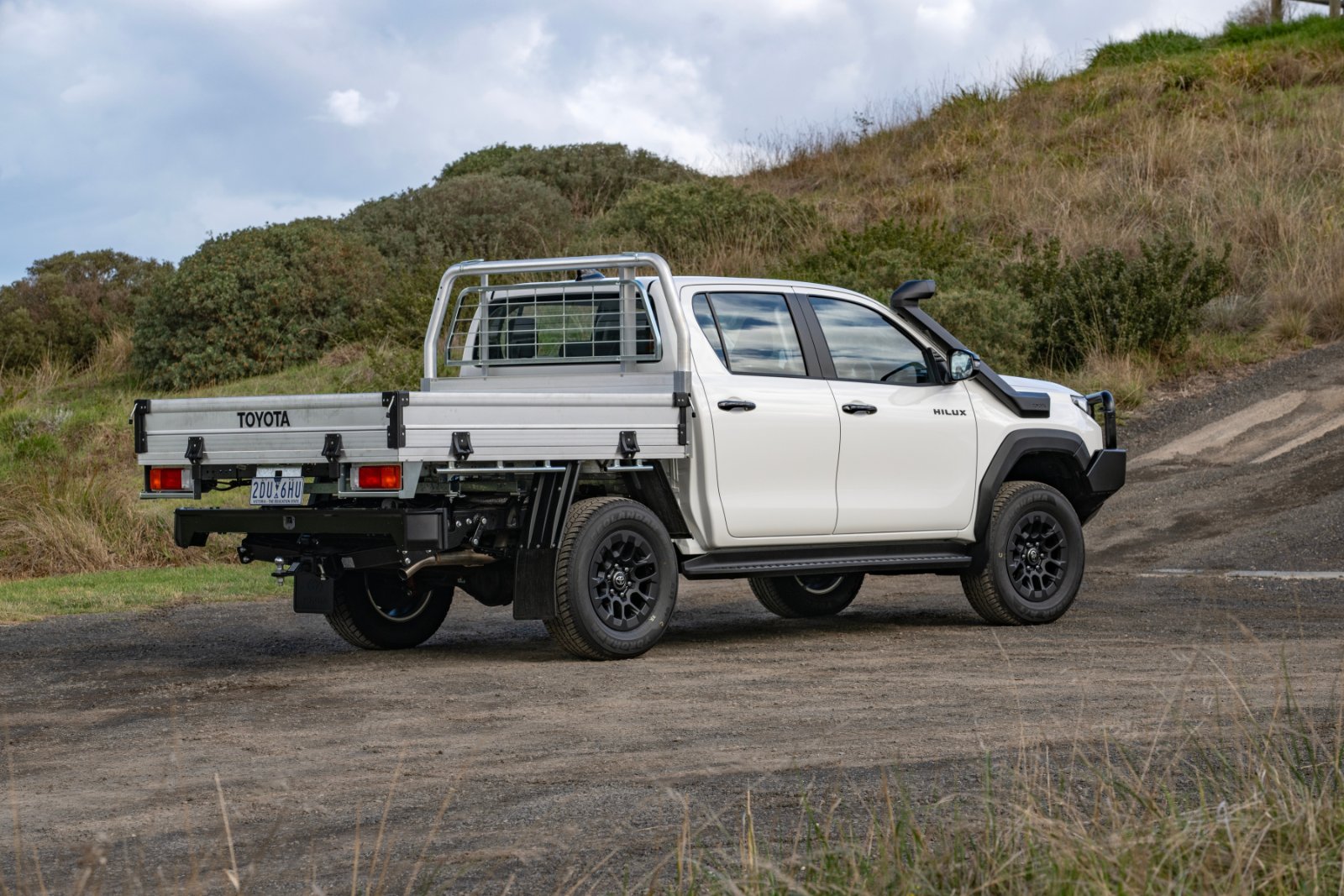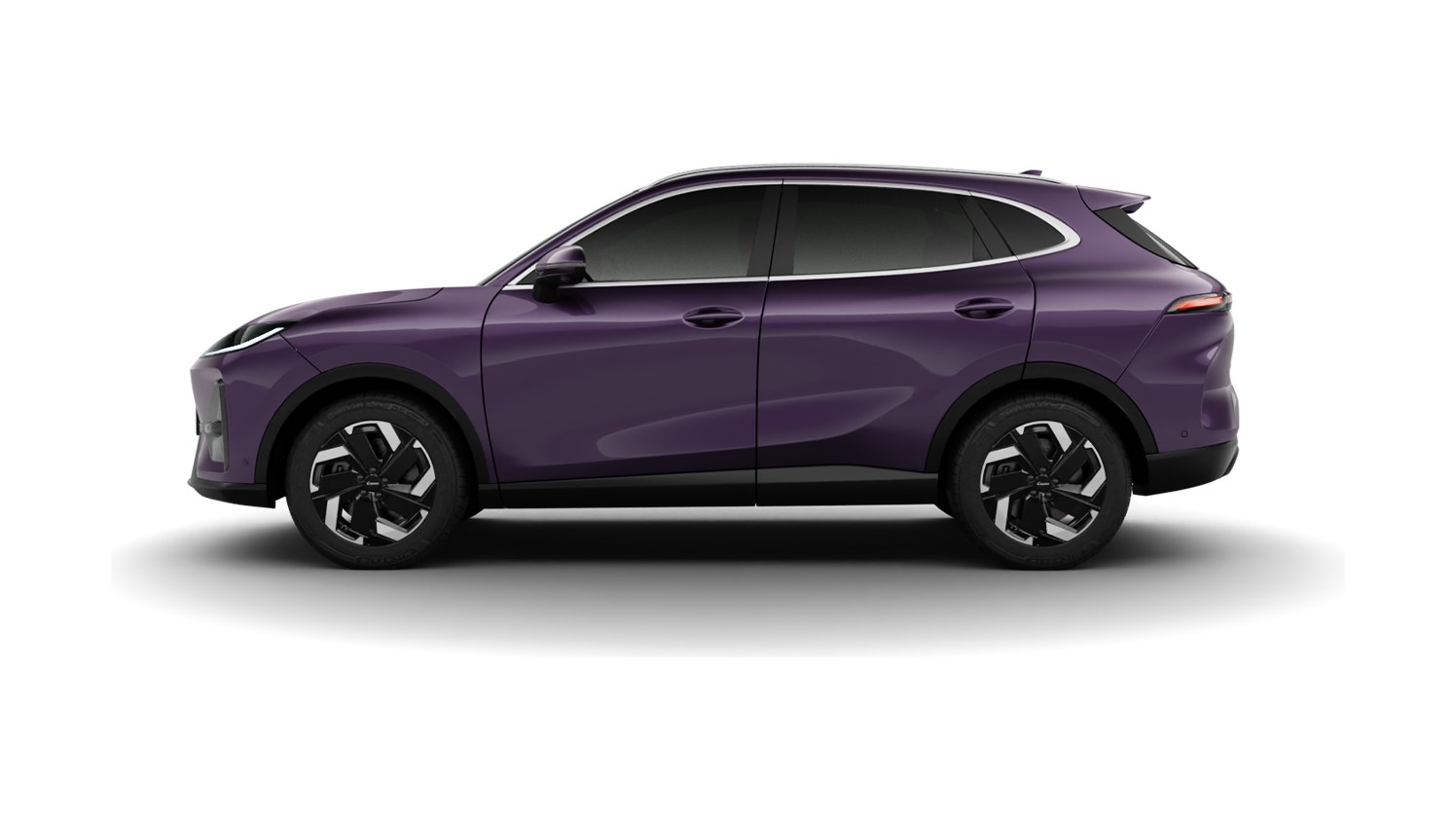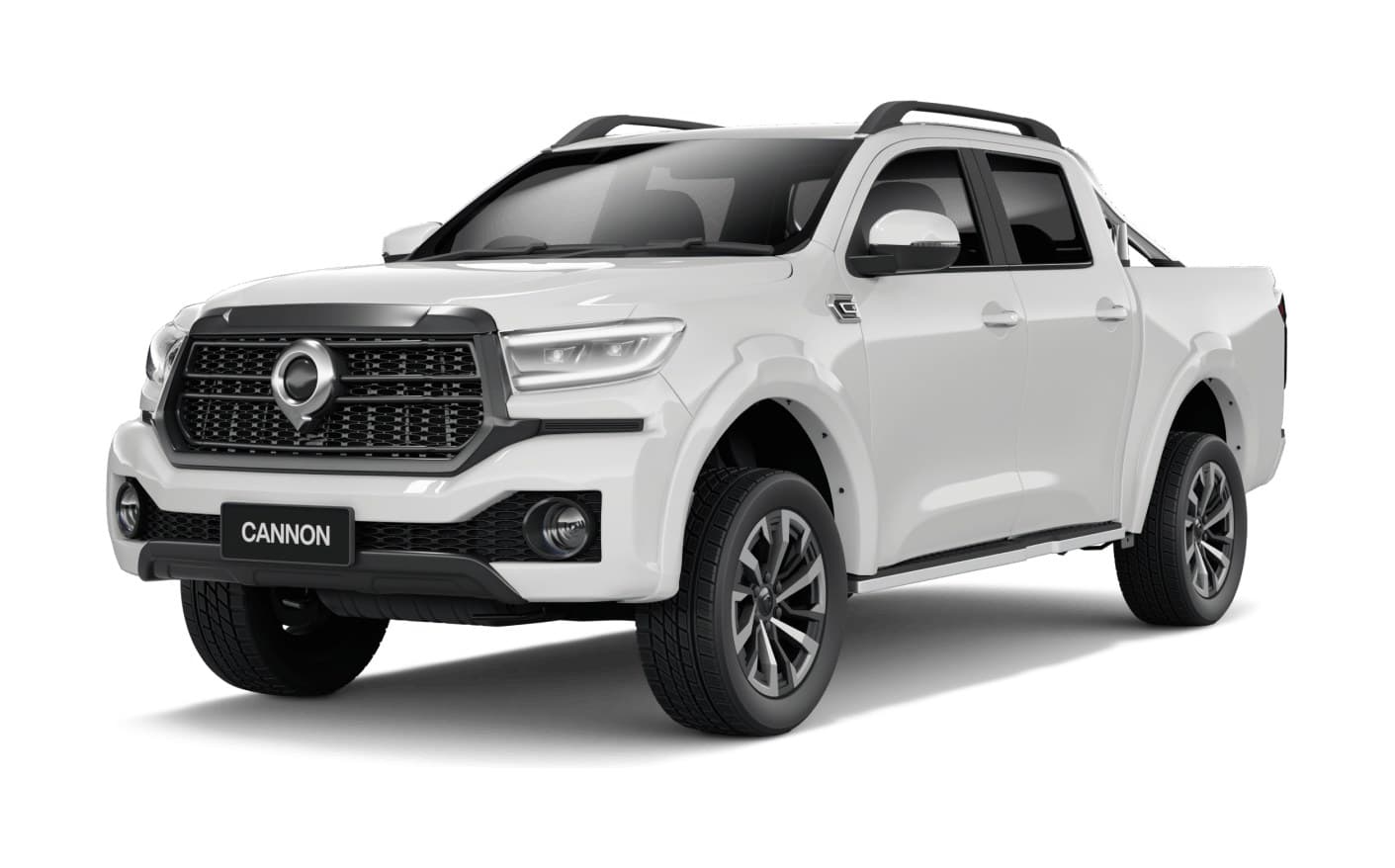
The new GWM Cannon Hi4-T undercuts the BYD Shark 6, the ute that made PHEV dual-cabs mainstream here. Both promise electric commuting in the week and petrol range on the weekend, but they differ on towing, hardware and price. We have not driven the Cannon Hi4-T yet, so these judgements are on paper.
Price and current offers
GWM lists the Cannon Hi4-T at $50,990 drive-away for the Lux and $54,990 drive-away for the Ultra. Those are private buyer prices quoted for Victoria. ABN holders pay $1,000 less in each grade ($49,990 and $53,990).
The launch deal is open to private and ABN buyers alike: a $2,000 drive-away cash bonus or a $2,000 fuel card, not both. GWM's terms say the cash bonus applies to vehicles ordered and delivered by 31 October 2026, while stocks last, and it cannot be combined with other offers. Take the bonus and the Lux is $48,990 drive-away for a private buyer.
BYD prices the Shark 6 before on-road costs: $55,900 for the Dynamic cab chassis, $57,900 for the Premium and $62,900 for the Performance. BYD's online configurator put a privately registered Premium in NSW at about $62,900 drive-away. BYD is running a $4,000 cashback on all three grades for orders placed between 1 October and 21 December 2026, with delivery by 31 December 2026. Fleet buyers, demonstrators and service loan cars are excluded, and the cashback cannot be stacked with BYD's 0.99 per cent finance offer.
Even after both deals, the Cannon Hi4-T stays several thousand dollars cheaper than a Shark 6 pickup once on-roads are added.
Specs side by side
| | Cannon Hi4-T (Lux, Ultra) | Shark 6 Premium | Shark 6 Performance | |---|---|---|---| | Price | $50,990 / $54,990 drive-away (private, VIC) | $57,900 plus on-roads | $62,900 plus on-roads | | Current offer | $2,000 bonus or fuel card to 31 Oct 2026 | $4,000 cashback to 21 Dec 2026 | $4,000 cashback to 21 Dec 2026 | | Engine | 2.0L turbo petrol | 1.5L turbo petrol | 2.0L turbo petrol | | Combined outputs | 310kW, 750Nm | 321kW, 650Nm | 350kW, 700Nm | | Drive | 9-speed hybrid auto, mechanical 4x4 with low range | Dual motor e-AWD, single speed | Dual motor e-AWD, single speed | | Battery | 33.1kWh | 29.6kWh | 29.6kWh | | Claimed electric range | 115km (NEDC) | 100km (NEDC) | 80km (WLTP) | | DC charging | Up to 110kW | Up to 55kW | Up to 55kW | | Braked towing | 3,500kg | 2,500kg | 3,500kg | | Towball download | Not yet confirmed by GWM | 250kg | 350kg | | Payload | 835kg | 790kg | Not confirmed | | Fuel tank | 75L | 60L | 60L | | Warranty | 7 years, unlimited km | 6 years or 150,000km (battery 8 years or 160,000km) | Same as Premium |
Watch the test cycles. The Cannon's 115km and the Premium's 100km are both NEDC, so they compare directly. The Performance's 80km is WLTP, a tougher test. Expect less in real use either way.
Towing and payload: read the fine print
Both Cannon grades tow 3,500kg braked. The Shark 6 Premium stops at 2,500kg, so matching the GWM means the $62,900 Performance.
The catch is the gross combination mass. The Cannon Hi4-T has a GCM of 6,400kg and a GVM of 3,420kg, which works back to a kerb weight of about 2,585kg. Hook up a 3,500kg trailer and the ute itself can weigh no more than 2,900kg, leaving roughly 315kg for passengers, gear and the towball load combined. Two adults and a loaded tub will put you over. If you really tow at the limit, plan on a lighter trailer.
GWM has not published a towball download for the Cannon Hi4-T on its own site, so check the handbook before buying a hitch. The Shark 6 Premium is rated at 250kg on the ball, which rules out heavier caravans; the Performance lifts that to 350kg. On payload the Cannon's 835kg edges the Premium's 790kg. Neither is a one tonne ute.
Hardware and safety
The Cannon Hi4-T uses mechanical four-wheel drive with low range, an electronic rear diff lock and a leaf-sprung live rear axle: familiar hardware for people who drive proper tracks. The Shark 6 drives all four wheels electrically, has no low range, and runs independent double wishbone suspension at both ends.
Safety is a real difference. The Shark 6 has a five-star ANCAP rating. GWM's own fine print says the Cannon's five-star rating excludes the PHEV variants, so the Hi4-T is unrated for now.
A working week on home charging
Take a tradie covering 50km a day, five days a week: 250km. Charged overnight, both utes should do each day on electricity alone.
The Shark 6 Premium is listed at 21.2kWh per 100km, so that week uses roughly 53kWh. Multiply by your own tariff (off-peak if you charge overnight) for the weekly cost. GWM has not published an equivalent figure for the Cannon Hi4-T, though its bigger battery gives more buffer on long days.
The sums change once the battery is flat: the Premium is rated at 7.9L/100km on petrol below its reserve. We have left out dollar figures because we could not confirm electricity and fuel prices that apply across all states.
Cartell Assessment
On paper the Cannon Hi4-T is the better value buy for anyone who tows or goes off-road. You get 3,500kg towing, low range, a rear locker, a bigger battery and a seven-year unlimited-kilometre warranty for less money than a Shark 6 Premium. Be honest about that GCM, though: the 3,500kg rating leaves very little room for people and gear.
The Shark 6 is still the more polished, proven package, with a five-star ANCAP rating and a large owner base. The Premium fits buyers who mostly commute and tow light. If you need 3,500kg from BYD, the Performance gets you there for a lot more.
Cross-shopping bigger PHEV utes? Read our Shark 6 vs Ranger PHEV vs Cannon Alpha PHEV comparison, and see the GWM Cannon Alpha and Ford Ranger pages. Our launch story, GWM Cannon Hi4-T arrives from $47,990, has the full grade breakdown.
AU Outlook
PHEV ute prices are falling and both brands are leaning on offers. GWM's bonus closes on 31 October; BYD's cashback runs to 21 December. Before signing for a Cannon Hi4-T, ask about its ANCAP status and towball rating.