The mid size electric SUV fight in Australia now comes down to one number. The updated Xpeng G6 starts at $51,800 plus on road costs, which is $7,100 under the cheapest Tesla Model Y. We covered the price cut when it landed in July, in Xpeng cuts the G6 to $51,800, and with EVs now outselling every other powertrain in Australia this is the comparison more buyers are googling than any other. Every price and spec below was checked on 8 September 2026, the G6 figures against Xpeng Australia's official configurator and the Model Y figures against Tesla Australia's site. Both brands quote list prices before on road costs, so budget roughly $4,000 to $6,000 on top depending on your state (Tesla's own example puts the entry Model Y at $64,064 drive away in NSW).
Price and what each gives you
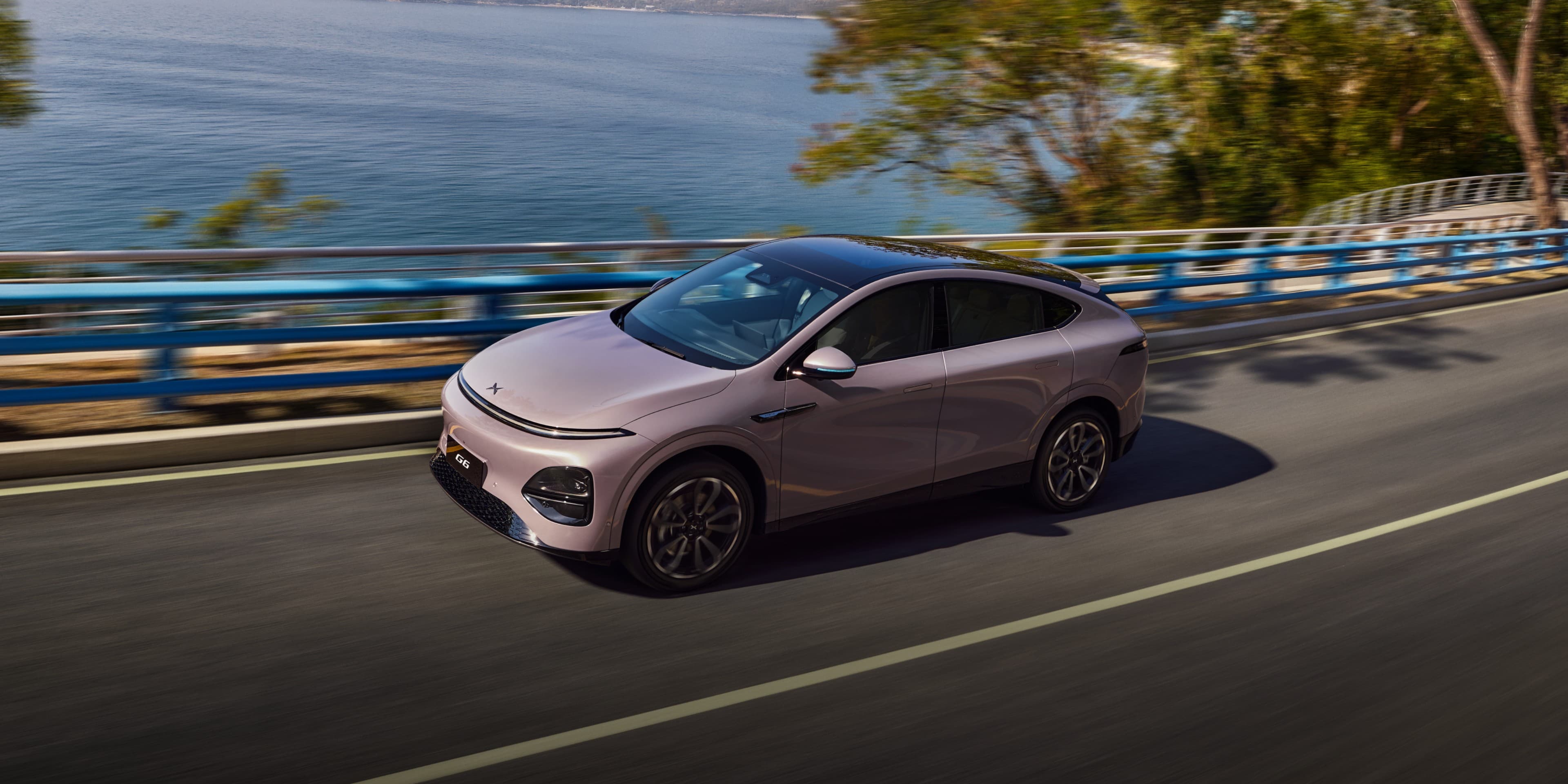
The G6 range is three variants plus an option pack. The RWD Standard Range is $51,800 with 185kW, a 68.5kWh LFP battery and 480km of WLTP range on the standard 18 inch wheels. The RWD Long Range is $56,800 with 218kW, an 80.8kWh battery and 525km. The AWD Performance is $63,800 with 358kW, 660Nm and a 4.13 second 0 to 100km/h time, and a $3,000 Black Edition pack takes it to $66,800. Premium paint is $1,500 across the board.
The Model Y line up starts at $58,900 for the Premium Rear-Wheel Drive with 466km of WLTP range and a 5.9 second 0 to 100km/h time. The Premium Long Range All-Wheel Drive is $68,900 with 600km, the stretched six seat Model Y L is $74,900, and the Performance is $84,900.
Line them up on money and the gap is consistent. G6 Standard Range to Model Y RWD: $7,100. G6 Long Range to Model Y Long Range AWD: $12,100. Even the flagship G6 Performance with the Black Edition pack undercuts the entry Model Y Performance by $22,600. On the spec sheet, the Tesla never gets cheaper than the Xpeng at any point in the range walk.
Range, charging and the 800V advantage
Range on paper goes to Tesla. The Model Y Long Range AWD's 600km WLTP figure beats the best G6 (the Long Range at 525km) by 75km, and the entry Model Y's 466km edges the entry G6's 480km close enough to call it level. If maximum range per charge is the whole question, the Long Range Tesla wins it.
Charging speed goes the other way. The G6 runs an 800V silicon carbide platform, and Xpeng quotes a peak DC rate of 382kW for the Standard Range and 451kW for the 80.8kWh cars, with 10 to 80 per cent in 12 minutes on a charger that can deliver it. Tesla quotes a 250kW maximum on the Supercharger network, good for up to 266km added in 15 minutes on the Long Range. The caveat for the Xpeng is real world hardware: chargers above 350kW are still thin on the ground in Australia, so the G6's full party trick needs the right site. On a 350kW unit it will still out charge the Tesla comfortably; on a 250kW one the two are closer than the spec sheet suggests.
The G6 also gives you vehicle to load as standard, 6kW on the AWD Performance, so it can run a campsite or power tools from the charge port. The Model Y does not offer V2L in Australia.
The family test
Both are five seat mid size SUVs with flat floors and big boots, but they measure cargo differently, so do not compare the raw numbers. Xpeng quotes 571 litres seats up and 1,374 litres folded, measured to the parcel shelf. Tesla quotes 2,138 litres total storage, measured to the roof with the seats folded and including the front boot. In practice they are both properly big; the Tesla's front boot and underfloor bins give it the edge for family clutter, and its rear doors open wider for child seats.
The Tesla cabin is the more radical: a 16 inch centre screen, an 8 inch rear screen for the second row, and almost no physical controls. The G6 keeps a driver display in front of the wheel, which plenty of buyers will quietly prefer. If you need more than five seats, Tesla simply wins, because the Model Y L exists and the G6 has no answer.
On safety, both wear five star ANCAP ratings, though the Model Y's most recent assessment lost ground on child occupant protection against the tougher 2026 criteria. Check the ANCAP reports for the details rather than the star count alone.
Dealer network and ownership risk
This is the part of the comparison the spec table hides. Tesla has been selling cars in Australia for over a decade, runs its own stores and service centres, and operates the largest and most reliable fast charging network in the country. The Model Y has been Australia's best selling car outright for multiple months in 2026, which means parts, panel beaters and resale comparables all exist at scale.
Xpeng's Australian story is shorter and bumpier. The brand relaunched under factory control in 2026 after taking over from its collapsed importer TrueEV, and honoured the warranties and cashbacks of existing owners while doing it, which is to its credit. The factory backing answers the biggest ownership question, and the warranty goes further than Tesla's: seven years with unlimited kilometres on the vehicle and eight years or 160,000km on the battery and key parts, against Tesla's five years unlimited on the vehicle and eight years or 192,000km on the battery. But the store, service and charging footprint is still a fraction of Tesla's, and if you live outside the capitals that matters more than any spec.
The resale question nobody answers
Nobody can tell you what a 2026 G6 will be worth in 2030, and anyone who quotes you a number is guessing. What we can say is structural. Tesla resale benefits from volume and brand recognition, but suffers from Tesla's own habit of cutting new car prices, which reprices every used example overnight. Xpeng resale carries the classic newcomer discount: a thinner buyer pool and a shorter track record, partly offset by the transferable seven year warranty, which is a genuine used value document. If you keep cars for seven or more years, the resale gap shrinks toward irrelevant and the $7,100 you did not spend stays in your pocket. If you flip cars every three years, the Tesla is the safer hold.
Cartell verdict
The G6 is the better value proposition at every price point, and it is not particularly close. It is $7,100 cheaper at entry, charges faster at its peak, includes V2L, and carries the longest warranty in the segment contest. The Model Y counters with more range in Long Range form, the bigger real world cargo solution, the six seat option, the Supercharger network and the lowest risk ownership story in Australian EVs.
Buy the G6 if you charge at home, live within reach of a decent DC network, and want the most car for the least money. Buy the Model Y if you tour long distances, need the charging network to just work everywhere, or plan to sell within a few years. And if you are still weighing up whether an EV suits you at all, start with our hybrid vs electric guide and our cheapest EVs in Australia rundown before you spend a dollar.
Prices and specifications checked 8 September 2026 against the Xpeng Australia configurator and Tesla Australia's online design studio. Both exclude on road costs unless stated.