Plug-in hybrids are the fastest-growing type of car in Australia, and the most misunderstood. Done right, a plug-in hybrid (PHEV) lets you do almost all of your weekday driving on cheap electricity, then head off on a long trip with no range anxiety at all. Done wrong, it is a heavy petrol car that rarely gets plugged in.
This guide explains how they work, what the numbers on the window sticker really mean, and which ones are worth a look.
What is a plug-in hybrid?
A plug-in hybrid has a petrol engine, one or more electric motors and a battery that you charge from a power point or charger. The battery is much bigger than in a regular hybrid, typically about 10 to 34 kWh in today's cars, so it can drive the car on electricity alone for roughly 50 to 150 km depending on the model.
When the battery runs low, the car carries on as a hybrid, using the petrol engine. You never get stranded, and you can always fill up at a servo.
PHEV vs hybrid vs EV vs range extender
| Type | Plugs in? | Petrol engine? | How it works |
|---|---|---|---|
| Hybrid (HEV), e.g. Toyota Corolla Cross | No | Yes | Small battery charged by the engine and braking. Saves fuel, but cannot drive far on electricity. |
| Plug-in hybrid (PHEV), e.g. BYD Sealion 6 | Yes | Yes | Big battery for daily electric driving, petrol engine for longer trips. |
| Range extender (EREV), e.g. Leapmotor C10 Hybrid | Yes | Yes, as a generator | The wheels are always driven by electric motors. The engine only charges the battery. |
| Electric vehicle (EV), e.g. Tesla Model Y | Yes | No | Battery only. Longest electric range, no petrol at all. |
How far can a PHEV go on electricity?
Further than most people's daily drive. Australians drive about 30 to 40 km a day on average, so even a modest PHEV can cover a normal commute on battery alone, if you charge it every night.
Watch the test cycle when you compare. Some brands quote the older NEDC cycle, which gives bigger numbers, and others quote WLTP, which is closer to real driving. A car claiming 140 km NEDC may only manage around 100 km in the real world. Where we can, we tell you which cycle a figure uses.
What the fuel figure really means
PHEV fuel figures look astonishing, often 0.7 to 1.5 L/100 km. That number assumes you start each test with a full battery, so it mostly measures electric driving. If you never plug in, expect normal hybrid fuel use instead, often 5 to 7 L/100 km for a mid-size SUV, and sometimes more because PHEVs are heavy.
The rule is simple: a PHEV only saves money if you charge it.
Charging a plug-in hybrid
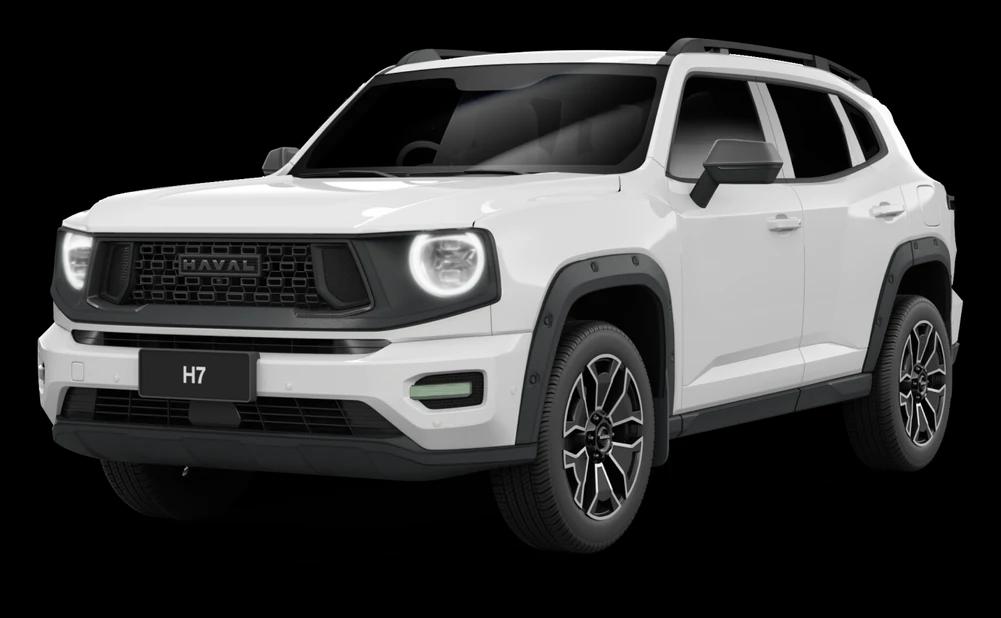
Most PHEVs charge from a normal household power point overnight. A dedicated wall box makes it faster: most PHEVs accept between 3.3 kW and 11 kW on AC, which fills a typical battery in a few hours. Some, like the Haval H7, also take DC fast charging, which is handy but rarely needed for daily use.
What does it cost to run?
Here is a simple example. Say you drive 40 km a day and your PHEV uses about 20 kWh per 100 km on electricity. That is 8 kWh a day. At 30 cents per kWh on a standard home tariff, that costs about $2.40 a day. A petrol car using 7 L/100 km at $1.95 a litre would cost about $5.46 for the same trip. On an off-peak or solar tariff, the gap is wider still.
Your numbers will vary with your electricity plan, fuel prices and the car, but the pattern holds: the more you charge, the more you save.
The cheapest plug-in hybrids in Australia
From our directory, checked November 2026. Prices are before on-road costs unless marked drive-away.
| Model | From | Electric range claim |
|---|---|---|
| BYD Sealion 5 | $33,990 | Not yet in our data |
| BYD Seal 6 | $34,990 | 55 to 100 km WLTP |
| Chery Tiggo 7 Super Hybrid | $34,990 drive-away | 93 km NEDC |
| Geely Starray EM-i | $37,490 | 83 to 136 km WLTP |
| BYD Sealion 6 | $42,990 | 92 to 140 km NEDC |
| GWM Haval H7 PHEV | $49,990 drive-away | 137 km WLTP |
| Toyota RAV4 PHEV | $58,840 | 113 to 121 km WLTP |
| Mitsubishi Outlander PHEV | $58,990 | 86 km WLTP |
For the full ranked list, see our cheapest plug-in hybrids in Australia. For a head-to-head of the most popular mid-size plug-ins, read our Haval H7 vs RAV4 PHEV vs Sealion 6 comparison.
Can a PHEV tow?
Yes, but check the rating. Towing capacities vary a lot, from 750 kg on some front-wheel drive models to 1500 kg on the Haval H7, and 2500 kg to 3500 kg on the BYD Shark 6 plug-in ute. Towing also uses the battery much faster, so expect to run mostly on petrol with a trailer on.
Is a plug-in hybrid right for you?
A PHEV makes sense if:
- You can charge at home or work most days.
- Your daily driving is under about 80 km.
- You take regular long trips and do not want to plan around fast chargers.
Skip it and buy a regular hybrid if you cannot charge at home. Go fully electric if your long trips are rare and you have good charging nearby.
Cartell Assessment
A plug-in hybrid is the best of both worlds for the right driver and the worst of both for the wrong one. If you will plug in every night, a PHEV can cut your fuel bill dramatically without asking you to change how you travel. If you will not, buy a hybrid and save the extra purchase price.
Browse every plug-in hybrid in our car directory, or use the Car Finder and choose plug-in hybrid.
Frequently asked questions
What is the difference between a hybrid and a plug-in hybrid?
A hybrid has a small battery charged by the engine and braking, so it cannot drive far on electricity. A plug-in hybrid has a much bigger battery that you charge from the grid, so it can do roughly 50 to 150 km on electricity before the petrol engine is needed.
Do you have to plug in a plug-in hybrid?
No, it will still drive as a hybrid. But you lose most of the savings, because the fuel figure on the sticker assumes regular charging.
What is the cheapest plug-in hybrid in Australia?
From our directory in November 2026, the BYD Sealion 5 at $33,990 before on-road costs. The BYD Seal 6 sedan is $34,990 before on-road costs and the Chery Tiggo 7 Super Hybrid is $34,990 drive-away.
How long does a PHEV take to charge?
Overnight on a household power point for most models, or a few hours on a home wall box. Some, like the GWM Haval H7, can also use DC fast chargers.