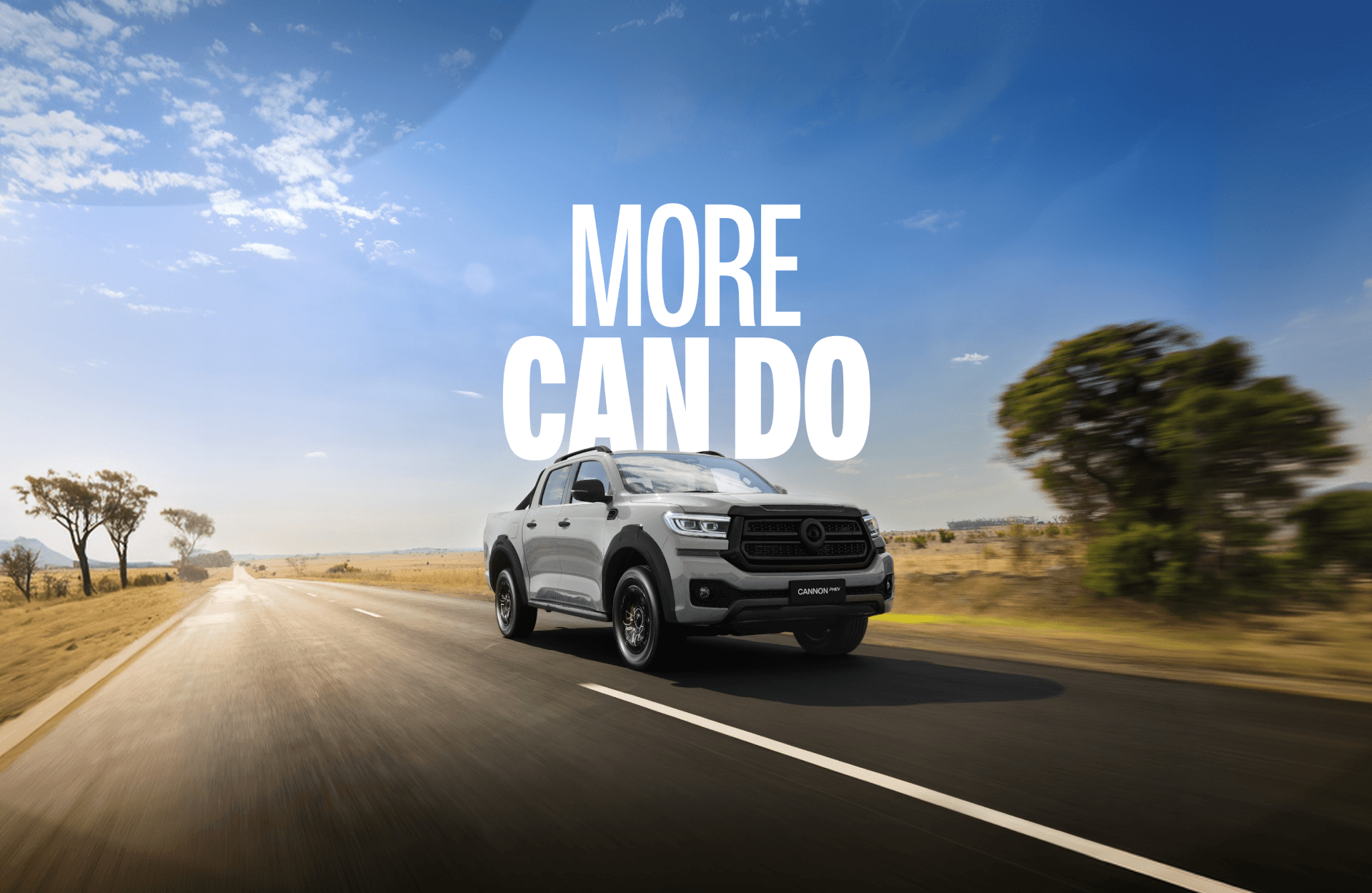
Australia's plug-in ute fight just found a new floor. The GWM Cannon Hi4-T was priced on 19 September from $48,990 drive away for private buyers, which parks it $8,910 under the BYD Shark 6 Premium's current $57,900 drive-away deal. So the buyer question writes itself: is the Shark 6 worth the extra nine grand, and does BYD's 32,009 ute recall change your answer? Here is the maths, checked against both manufacturers on 22 September 2026.
The prices as of this week, and the fine print
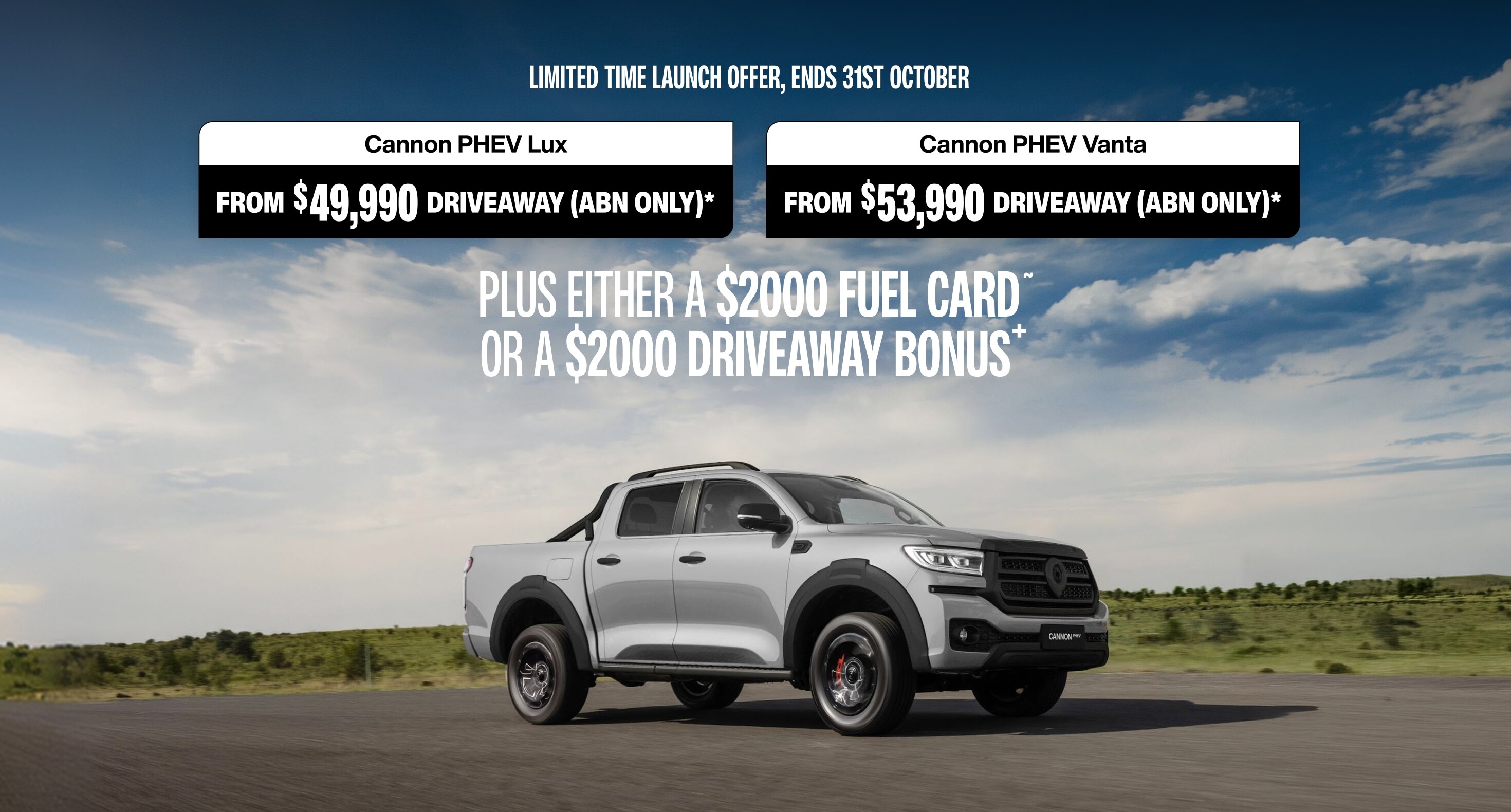
GWM sells the Cannon Hi4-T in two trims. GWM's own pricing shows the Lux from $49,990 drive away and the Vanta from $53,990 drive away for ABN holders, with private buyers paying $1,000 more at $50,990 and $54,990. Until 31 October 2026 there is a launch offer on top: a $2,000 drive-away bonus or a $2,000 fuel card, your pick. Take the bonus and the Lux lands at $48,990 drive away private, or $47,990 with an ABN. Pre-orders are open now and utes reach showrooms from mid October.
The Shark 6 Premium pickup lists at $57,900 plus on-road costs, but BYD's offers page is currently waiving the on-roads: order between 1 August and 30 September 2026 and take delivery by 31 October, and $57,900 is your drive-away price. The Dynamic Cab Chassis lists at $55,900 plus on-roads, and this month it is $57,900 drive away including a genuine heavy-duty alloy tray, or you can take a $3,000 credit toward accessories and charging gear instead. The 350kW Shark 6 Performance tops the range at $62,900 plus on-roads.
Note the deadlines. BYD's free on-roads deal closes 30 September. GWM's launch bonus runs to 31 October, and the Cannon Hi4-T is the one you cannot drive home before mid October anyway.
Power, towing and tray compared
On outputs the two are closer than the price gap suggests. The Shark 6 Premium pairs a 1.5 litre turbo petrol engine with two electric motors for 321kW and 650Nm, good for a claimed 5.7 seconds to 100km/h. The Cannon Hi4-T answers with a 2.0 litre turbo and a single motor for 310kW and 750Nm, driving through a nine speed hybrid automatic and a proper mechanical four wheel drive system with a low-range transfer case and a locking rear differential.
Towing is where they split. The Shark 6 Premium and Dynamic are rated to tow 2,500kg braked, and you have to step up to the $62,900 Performance to get the full 3,500kg. The Cannon Hi4-T tows 3,500kg in both trims, with a dedicated towing drive mode. If a big van, a horse float or a car trailer is part of your life, that single line probably settles the argument nine grand in GWM's favour.
The Shark 6 counters on polish and pace. It is the quicker, plusher, more car-like ute, its cabin tech still leads the class, and it is the country's best-selling plug-in ute for a reason. The Cannon's low-range hardware and rear locker make it the more serious off-road tool on paper, a trick it borrows from the larger Cannon Alpha PHEV we rated highly.
EV range and charging on a work week

The GWM carries the bigger battery: 33.1kWh of LFP for a claimed 115km of electric-only range on the lenient NEDC cycle, against the Shark 6's 29.58kWh Blade battery and 100km NEDC claim. Both claims shrink in the real world, but the shape of the argument holds: if your daily running is under about 80km and you plug in overnight, either ute does the working week on electricity and keeps the petrol for the weekend.
GWM quotes DC fast charging at up to 110kW, with a 30 to 80 per cent top-up in around 18 minutes, and claims up to 1,037km of combined range from its internal testing. BYD quotes 800km of combined NEDC range for the Premium, with fuel use of 2.0L/100km on the official test against GWM's 2.4L/100km claim. Treat all four numbers as directional rather than gospel. Both utes offer vehicle-to-load, and the Cannon fits 230V outlets in the tub for tools and camp gear.
The recall question, answered honestly
BYD is recalling 32,009 Shark 6 utes, covering Premium, Performance and Dynamic builds made between 29 August 2024 and 15 June 2026, because the spare wheel support cable can wear and let the spare drop onto the road. The government listing is REC-006728. The fix is free, takes about half an hour, and BYD says to remove the spare until it is done.
Should it stop you buying one? On the evidence, no. Recalls follow volume, every ute brand has them, and a new build ordered today ships with the fix. What it does do is hand you a checklist: if you are buying a demonstrator or a near-new Shark 6, run the VIN through BYD's recall page before you sign, and ask the dealer to show the repair has been done. It is a bad look in the same month BYD is asking for your deposit by a deadline, but it is not a reason to switch queues on its own.
The honest caveat runs the other way too: the Shark 6 has been on Australian roads since the start of 2025, and the Cannon Hi4-T has not turned a wheel here yet. GWM's Hi4-T hardware has been proven here in the Cannon Alpha since 2025, but this exact ute is unproven, and we will not pretend otherwise until we have driven it.
Warranty and ownership
GWM wins the paperwork round: seven years with unlimited kilometres against BYD's six years or 150,000km, whichever comes first. BYD covers the Shark 6's traction battery for eight years or 160,000km. Both brands sell through growing national dealer networks, and both utes carry the running-cost case that has made plug-in utes the hot corner of the market: commute on cheap overnight electricity, fill the tank for the long hauls.
Which one for which buyer
Buy the Shark 6 if you want the proven article, and you want it now. It is quicker, the cabin is the segment's tech benchmark, 32,000-plus buyers have gone before you, and at $57,900 drive away with free on-roads the deal has never been sharper. You need your order in by 30 September, and you accept the 2,500kg towing cap on the volume trims.
Buy the Cannon Hi4-T if the money matters or the trailer does. It is around $9,000 cheaper like for like, tows 3,500kg, carries the bigger battery and longer EV range claim, adds low range and a rear locker, and backs it with a seven year warranty. The trade: you are an early adopter of an unproven ute, and you wait until mid October to collect it.
If neither fits, the Ford Ranger PHEV opens at $59,000 drive away and is the best of the class to drive, with the smallest battery. Our three-way plug-in ute comparison covers that fight in full.
Cartell verdict
On paper, the Cannon Hi4-T takes this: more torque, more towing, more range, more warranty, nine grand less. But paper is all it has until the first utes land in October, and the Shark 6's counterpunch is everything you cannot spec-sheet, the polish, the pace and the proof of more than 32,000 utes already on the road. If your deposit is ready, 2,500kg of towing covers you and you want certainty, take the Shark 6 before the 30 September deadline. If you tow heavy, go bush or just like keeping $9,000, the smart money waits three weeks for the GWM. Either way, the real winner is the buyer: a year ago this class started at $57,900, and now it starts at $48,990.