Every new car sold here can wear a star rating, but five stars is not the whole story. ANCAP scores each car out of 100 per cent in four separate areas, and two five-star cars can be miles apart once you look at the numbers underneath. This guide ranks the current cars with the strongest scores, picks the safest option in each class, and names the cars that fell short.
Every figure below comes from ANCAP's own safety ratings database and model pages, read on 12 November 2026. ANCAP is the independent body that crash tests new cars for Australia and New Zealand. We have not used any other outlet's numbers.

How to read an ANCAP rating
For cars tested to the 2025 rules, ANCAP publishes four scores:
| Score | What it measures |
|---|---|
| Adult Occupant Protection | How well the driver and front passenger are protected in frontal, side and pole crashes |
| Child Occupant Protection | Protection for children in the back, plus how easily common child seats fit |
| Vulnerable Road User Protection | Injury risk to pedestrians, cyclists and motorcyclists the car hits, plus the AEB systems that try to avoid them |
| Safety Assist | Performance of driver aids such as autonomous emergency braking, lane support and speed assistance |
The other thing to check is the TESTED datestamp. ANCAP tightens its tests every three years, so a 2025 five-star car has passed a harder exam than a 2019 five-star car. ANCAP's own advice is to buy a five-star car with the most recent datestamp you can afford, and no older than six years. Ratings for cars tested in 2025 expire in December 2031.
Why 2026-tested cars are listed separately
From 2026 ANCAP changed its test structure completely. Scores are now grouped as Safe Driving, Crash Avoidance, Crash Protection and Post Crash, with new tests including a female dummy in the offset crash, pedal misapplication, on-road speed sign checks and EV battery fire warnings. Those percentages cannot be compared with the 2025 scores above, so we have ranked cars tested to the 2025 rules and covered the 2026 results in their own section below.
The top 10 all-rounders (2025 rules)
To find the best all-round performers, we added the four percentages together. That total is a rough CarTell yardstick, not an ANCAP figure, but it rewards cars that are strong everywhere rather than brilliant in one test. Every car here is a current model with a five-star rating.
| Rank | Car | Adult | Child | Vulnerable road users | Safety Assist | Total |
|---|---|---|---|---|---|---|
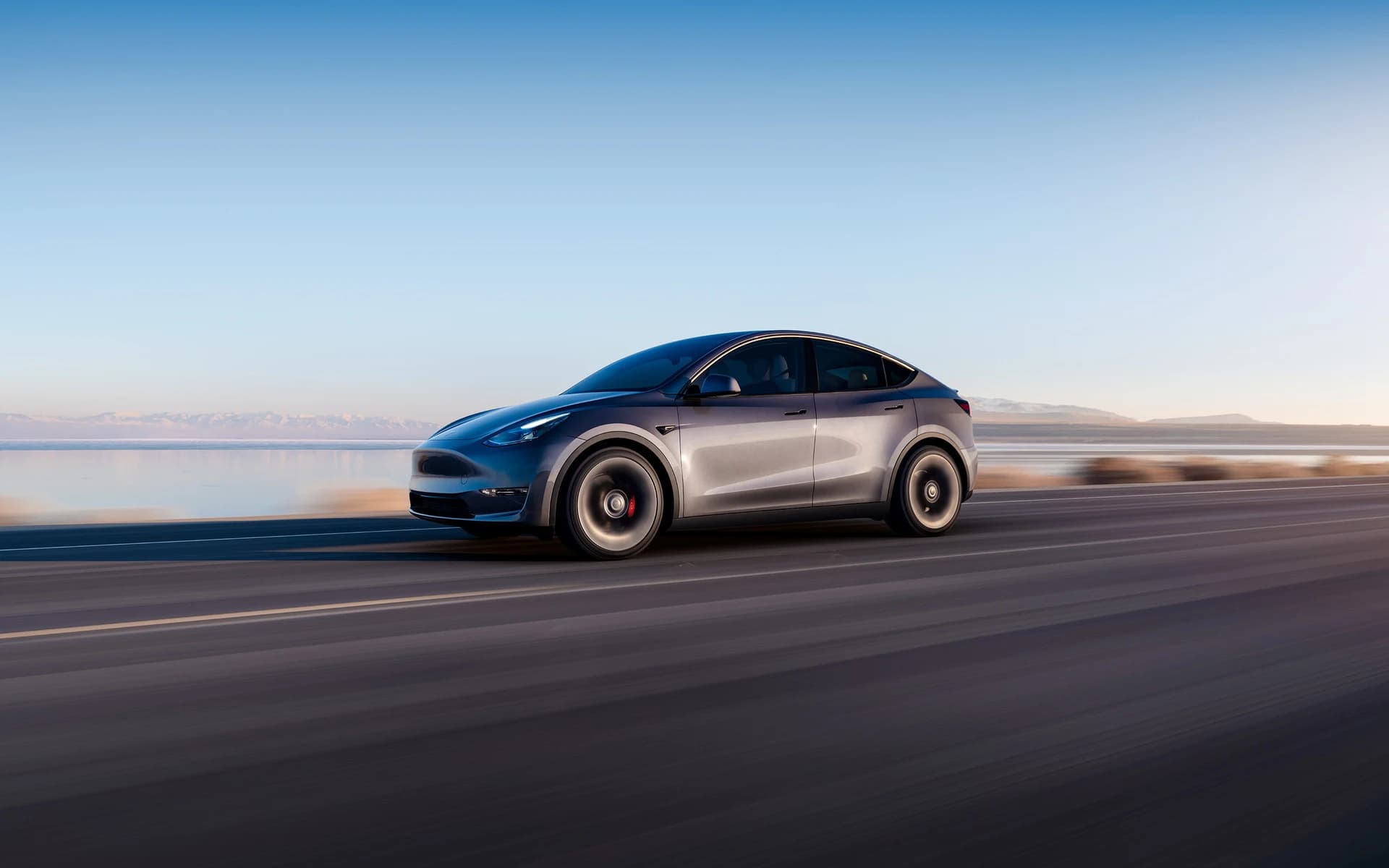
| 1 | Tesla Model Y | 91% | 95% | 86% | 92% | 364 |
| 2 | Tesla Model 3 | 90% | 95% | 89% | 88% | 362 |
| 3 | Mazda CX-5 | 90% | 91% | 93% | 87% | 361 |
| 4 | Mercedes-Benz CLA | 94% | 88% | 93% | 85% | 360 |
| 5 | Leapmotor B10 | 93% | 95% | 84% | 86% | 358 |
| 6 | Tesla Model Y L (six seats) | 91% | 88% | 86% | 92% | 357 |
| 7 | Volvo EX90 | 92% | 94% | 82% | 84% | 352 |
| 8 | BYD Seal 6 | 92% | 90% | 84% | 84% | 350 |
| 8 | Mercedes-Benz CLE Coupe | 93% | 86% | 87% | 84% | 350 |
| 10 | Geely Starray EM-i | 90% | 87% | 86% | 82% | 345 |
The Model Y result applies to the five-seat car built from February 2025 and on sale from May 2025; older Model Ys have a separate, earlier rating. Among cars tested to the 2025 rules, the Mercedes-Benz CLA's 94 per cent is the highest adult occupant score, and the Mazda CX-5 and CLA share the best vulnerable road user score at 93 per cent.
The most useful finding for most buyers is the Mazda CX-5. It is the only car in the top three priced in ANCAP's $35,000 to $65,000 bracket alone, it is petrol powered, and its 93 per cent for pedestrian and cyclist protection is the joint best of any car tested to the 2025 rules. The new-generation CX-5 went on sale in June 2026 and the rating covers every variant.
Safest small car under $35,000
Pick: MG4 Urban, 87% adult, 86% child, 85% vulnerable road users, 82% Safety Assist. Its 340 total is well clear of anything else in ANCAP's under-$35,000 bracket, and it covers every variant. We covered the result in our ANCAP story.
Other five-star options tagged under $35,000 on 2025 rules:
| Car | Adult | Child | VRU | Safety Assist | Note |
|---|---|---|---|---|---|
| BYD Atto 1 | 82% | 86% | 76% | 79% | Four seats only |
| Kia K4 | 85% | 80% | 77% | 77% | Five stars only with the Safety Pack on the base S |
| MG ZS | 81% | 84% | 73% | 79% | Five stars since the front centre airbag was added (story) |
The Kia K4 detail matters. The base K4 S without the optional Safety Pack is rated separately at four stars, with Safety Assist falling to 64 per cent. If you are buying a K4 S, tick the pack. For the wider picture on cheap, safe starter cars, see our best first car guide.
Safest mid-size SUV
Pick: Mazda CX-5, total 361. Runner-up: Leapmotor B10, total 358, with a 95 per cent child occupant score, equal best among cars tested to the 2025 rules.
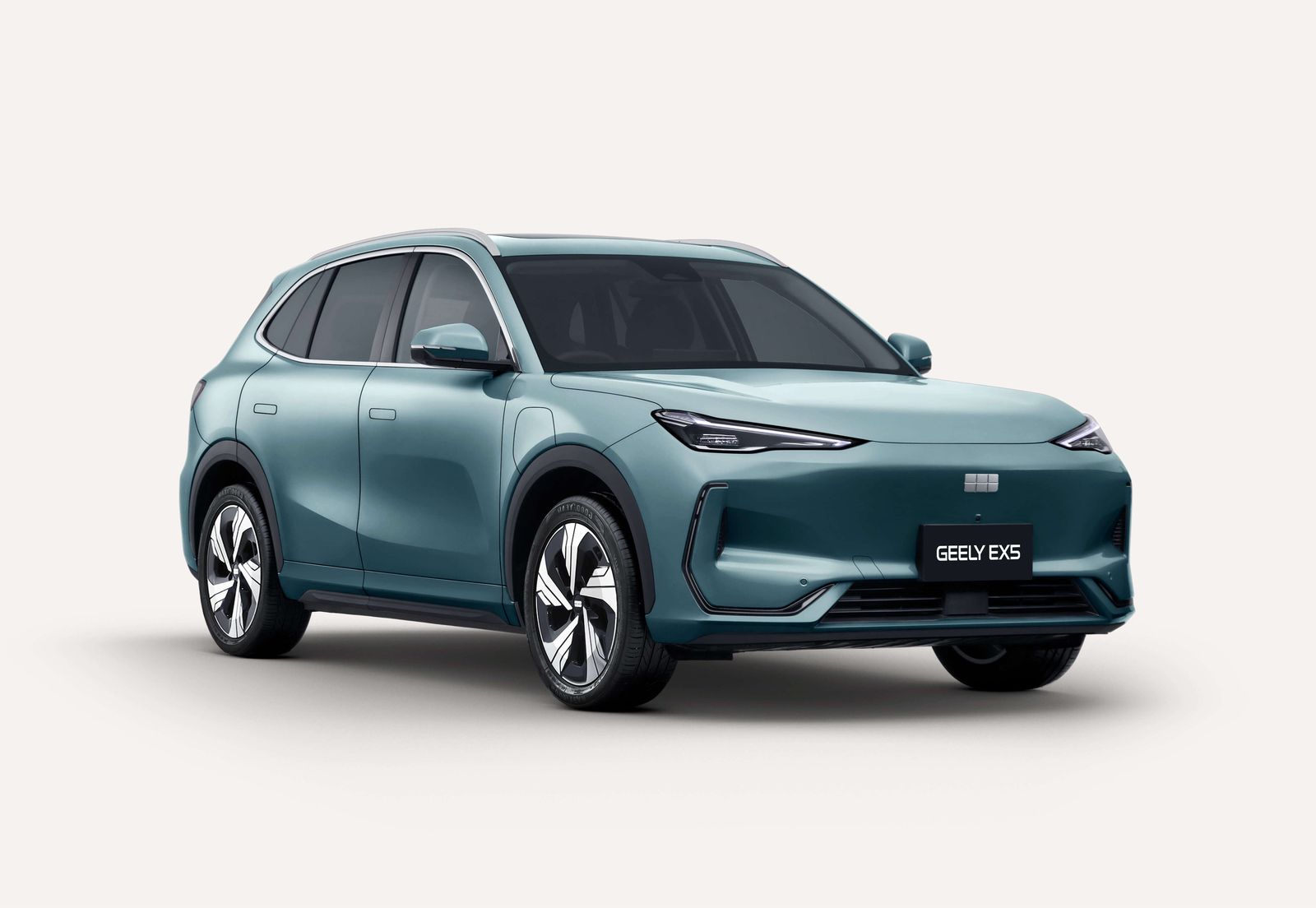
Other strong mid-size SUVs in the $35,000 to $65,000 bracket: the Geely Starray EM-i plug-in hybrid (345), the MG MGS6 EV (92% adult, total 344), the GWM Haval H7 (89, 91, 81, 80, total 341) and the Geely EX5 (86, 87, 83, 85, total 341). The BYD Sealion 7 pairs a 93 per cent child score with a weaker 76 per cent for vulnerable road users.
One notable gap: the new-generation Toyota RAV4, on sale since March 2026, still shows no star rating in ANCAP's database. We flagged that at launch and it had not changed when we checked for this guide.
Safest seven-seater
Mainstream pick: Volkswagen Tayron, 87% adult, 87% child, 83% VRU, 85% Safety Assist (total 342). It is the only car in the table below with no score under 83 per cent. Luxury pick: Volvo EX90, total 352, with 92 per cent adult and 94 per cent child protection.
| Seven-seat car (2025 rules) | Adult | Child | VRU | Safety Assist | Total |
|---|---|---|---|---|---|
| Volvo EX90 | 92% | 94% | 82% | 84% | 352 |
| Volkswagen Tayron | 87% | 87% | 83% | 85% | 342 |
| Denza B8 | 86% | 95% | 75% | 78% | 334 |
| Hyundai IONIQ 9 | 84% | 86% | 77% | 85% | 332 |
| Chery Tiggo 8 | 82% | 86% | 80% | 82% | 330 |
| MG QS | 88% | 86% | 76% | 80% | 330 |
| Hyundai Palisade | 89% | 86% | 71% | 73% | 319 |
| Mitsubishi Outlander | 85% | 84% | 79% | 70% | 318 |
The Palisade is strong at protecting the people inside, but its 71 per cent vulnerable road user score and 73 per cent Safety Assist pull it down the list. The BYD M9 people mover also has five stars, tested to the tougher 2026 rules (see below). For a wider look at family haulers, see our best seven-seater SUVs guide.
Safest ute
Pick: Toyota HiLux, the new generation on sale from November 2025: 84% adult, 89% child, 82% VRU, 82% Safety Assist (total 337). The rating covers all variants except the Rugged X.
| Ute (2025 rules) | Adult | Child | VRU | Safety Assist | Total |
|---|---|---|---|---|---|
| Toyota HiLux (exc. Rugged X) | 84% | 89% | 82% | 82% | 337 |
| BYD Shark 6 | 85% | 87% | 74% | 86% | 332 |
| Kia Tasman (exc. X-Line and X-Pro) | 87% | 85% | 74% | 80% | 326 |
Two cautions. The Tasman's five stars do not cover the X-Line and X-Pro grades. And the Ford Ranger and Everest both carry 2022 datestamps, which are still valid but were set under older rules. Large US pickups such as the Ford F-150, RAM 1500, Chevrolet Silverado and Toyota Tundra appear in ANCAP's database without a star rating, as does the LandCruiser 70 Series. More on the class in our best dual-cab utes guide.
The 2026-tested cars so far
Seven cars have been rated under the new 2026 rules at the time of writing. Six earned five stars:
| Car | Stars (2026 rules) |
|---|---|
| BMW iX3 | 5 |
| BYD M9 | 5 |
| GAC AION UT | 5 |
| Geely EX2 | 5 |
| Leapmotor B05 | 5 |
| XPENG X9 | 5 |
| BYD Sealion 5 | 3 |
The BYD Sealion 5 plug-in hybrid scored 48 per cent for Safe Driving and 51 per cent for Crash Avoidance. ANCAP's report notes it cannot detect phone use or intervene if the driver becomes unresponsive, has no child presence detection, and showed mixed AEB performance at intersections. Its 79 per cent Crash Protection score shows the body itself held up better. Two of the newest small EVs, the Geely EX2 and Leapmotor B05, cleared the new bar too, as we reported in September.
Cars that missed five stars (2025 rules)
| Car | Stars | Weakest score |
|---|---|---|
| Suzuki Fronx | 1 | Child occupant 40% |
| MG 5 | 3 | Safety Assist 59% |
| Hyundai Inster | 4 | Safety Assist 69% |
| MG 3 | 4 | Safety Assist 70% |
| Nissan Qashqai | 4 | Safety Assist 62% |
| Peugeot 3008 and 5008 | 4 | Safety Assist 65% |
| Suzuki e Vitara | 4 | Safety Assist 71% |
| BMW 1 Series and 2 Series Gran Coupe | 4 | Adult occupant 78% |
| Kia K4 S without Safety Pack | 4 | Safety Assist 64% |
The Fronx is the stand-out concern: one star, with 48 per cent for adult occupants and 40 per cent for children. Our Fronx story covers why. A four-star car is not unsafe, but at the same price there is almost always a five-star alternative.
Cartell verdict
If safety is your first filter, the Tesla Model Y and Model 3 have the most complete scores of any car tested to the 2025 rules, but the car we would point most families to is the Mazda CX-5: top-three safety, the best pedestrian protection available, and a mainstream price bracket. On a tight budget the MG4 Urban is the clear pick under $35,000. For seven seats, the Volkswagen Tayron is the most balanced mainstream choice, and for a ute the new Toyota HiLux leads on the latest rules.
Whatever you buy, check three things at the dealer: the star rating, the TESTED year, and that the rating covers the exact grade you are buying. Several ratings above exclude specific variants, and that fine print is where buyers get caught. For our other buying advice, see the best family SUVs and best small SUVs guides.
All scores were read from ancap.com.au on 12 November 2026. ANCAP publishes new results regularly, so check the current rating for the exact model and variant before you buy.